
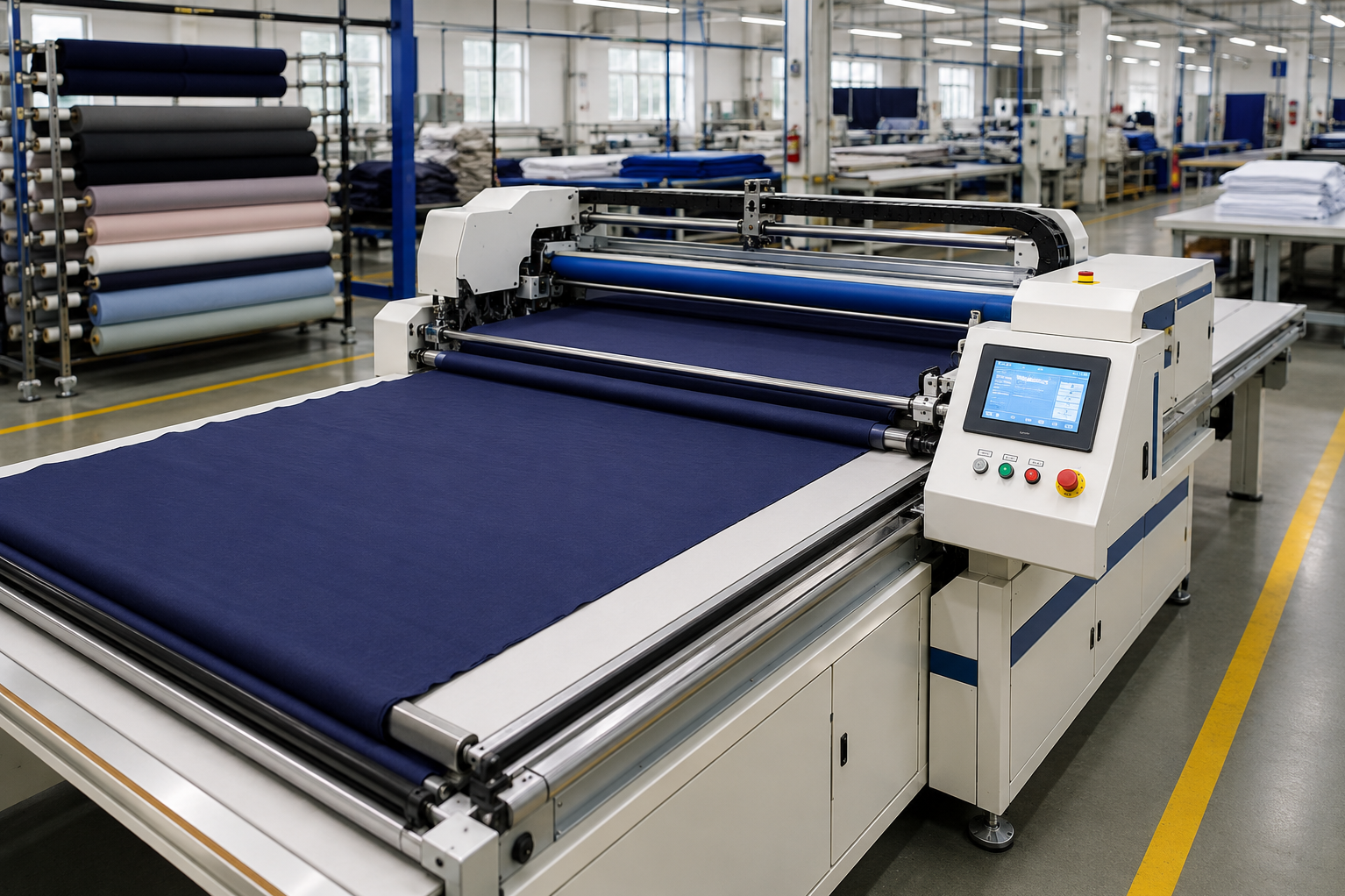
Fabric spreading directly affects cutting accuracy, production speed, and material utilization. Uneven spreading can create wrinkles, fabric tension, and alignment issues that impact the quality of finished garments. A Fully Automatic Fabric Spreading Machine helps manufacturers create uniform fabric lays while reducing manual effort.
Understanding the features that matter most can help buyers choose equipment suited to their production needs.
Why Fabric Spreading Is So Important
Proper spreading creates a stable foundation for accurate cutting. Poorly spread fabric often results in:
- Pattern mismatches
- Fabric wastage
- Cutting inaccuracies
- Production delays
- Increased rejection rates
Automated spreading systems help eliminate these common production issues.
Features Worth Comparing
Not all spreading machines offer the same capabilities. Manufacturers should focus on practical performance rather than simply comparing specifications.
Adjustable Spreading Speed
Different fabrics require different handling speeds. Machines with adjustable settings provide greater flexibility across multiple garment categories.
Fabric Tension Control
Maintaining consistent tension helps prevent stretching or distortion during spreading.
Automatic Edge Alignment
Accurate edge control improves cutting precision and reduces trimming waste.
User-Friendly Controls
Simple operating interfaces reduce training time and improve day-to-day productivity.
Fabric Compatibility
The machine should handle woven, knitted, stretch, and lightweight materials according to the factory's production requirements.
Why Manufacturers in Tiruppur Prefer Automation
The apparel sector in Tiruppur, Tamil Nadu, serves brands that expect consistent quality and timely deliveries. Automated spreading systems help manufacturers increase productivity while maintaining high-quality standards across large production batches.
As factories expand their operations, efficient spreading becomes an important step toward fully integrated production automation.
Rainbow Garment Machines works with manufacturers to identify spreading equipment that matches production volume, fabric characteristics, and future expansion plans. This practical approach helps businesses invest in machinery that supports long-term operational goals.
Selecting the right fabric spreading machine is not just about increasing speed—it is about building a reliable production process that delivers consistent results every day.
Keywords


