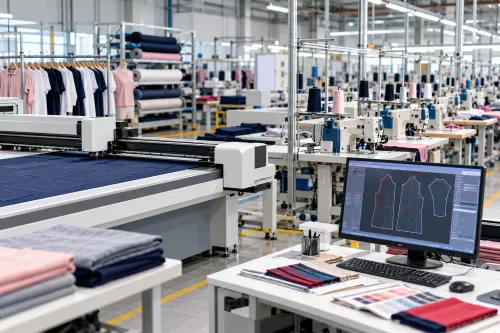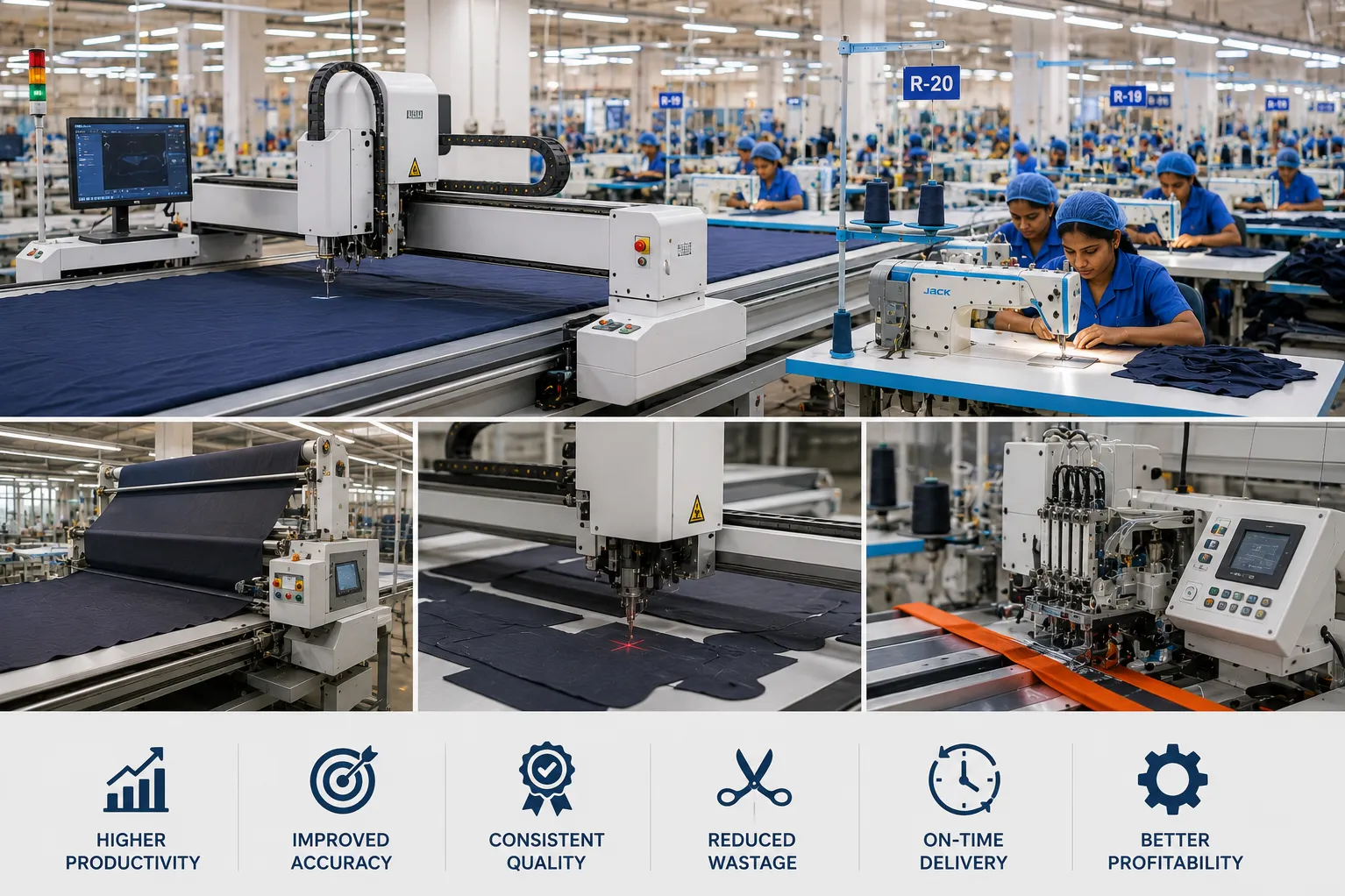
Automation is no longer reserved for large-scale apparel manufacturers. As production demands continue to increase, many small and medium garment factories are also investing in automated technologies to improve efficiency and remain competitive.
The challenge is knowing when the timing is right.
If your factory experiences recurring production bottlenecks, automation may provide measurable operational benefits.
Production Targets Keep Getting Harder to Meet
When customer orders increase but production capacity remains the same, manual processes often become the limiting factor.
Common warning signs include:
- Frequent overtime
- Missed delivery schedules
- Long production cycles
- Overloaded operators
- Increasing order backlogs
Automation helps improve workflow without necessarily increasing workforce size.
Material Waste Is Increasing
Fabric and trim costs represent a significant portion of garment manufacturing expenses.
If your factory regularly experiences:
- Excess fabric waste
- Cutting inconsistencies
- Elastic wastage
- Repeat production errors
it may indicate that automated machinery could improve production accuracy.
Maintaining Consistent Quality Is Becoming Difficult
As production volume grows, maintaining uniform quality becomes more challenging.
Automated systems help standardize operations such as:
- Fabric spreading
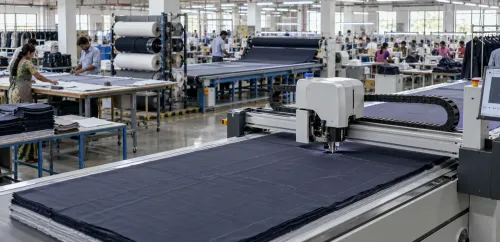
- Cutting
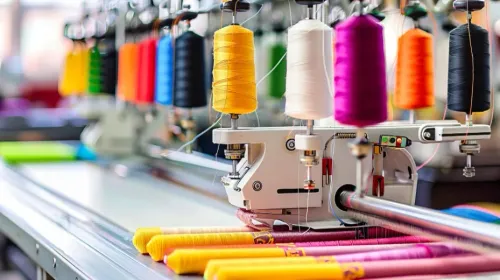
- Sewing
- Elastic processing
This reduces product variation between batches.
Tiruppur Manufacturers Are Embracing Smart Production
Across Tiruppur, Tamil Nadu, garment manufacturers continue investing in automation to support export-quality production. Automated equipment enables factories to improve consistency while managing larger production volumes without creating unnecessary operational complexity.
Factories that modernize gradually often experience smoother implementation than those attempting large-scale upgrades all at once.
Rainbow Garment Machines supports manufacturers evaluating automation opportunities by recommending machinery based on production challenges rather than promoting unnecessary equipment upgrades.
A Practical Automation Roadmap
Instead of automating every process simultaneously, manufacturers can prioritize areas with the highest return.
Typical starting points include:
- Fabric spreading
- Fabric cutting
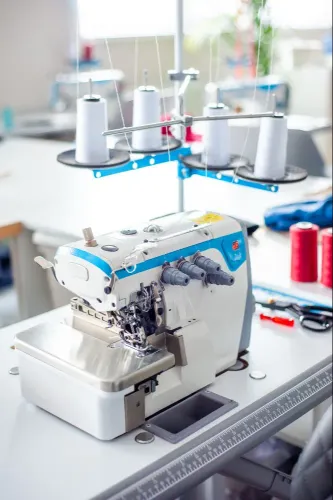
- Sewing automation
- Elastic processing
- Material handling
A phased approach allows businesses to improve productivity while managing investment costs effectively.
Automation should ultimately support better manufacturing decisions, stronger production control, and sustainable business growth.
Keywords