
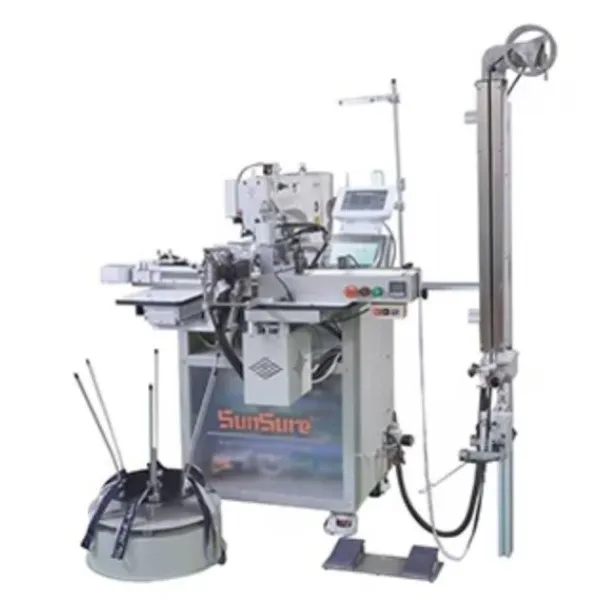
Elastic application is a common process in the production of innerwear, sportswear, children's clothing, and fashion garments. When this task is performed manually, it can lead to uneven cuts, inconsistent joins, and slower production speeds. An Elastic Cut and Join Machine addresses these challenges by automating one of the most repetitive operations on the production floor.
For manufacturers handling medium to high production volumes, the machine can improve both efficiency and product consistency.
How the Machine Works
Instead of measuring, cutting, and joining elastic manually, the machine performs these functions in a continuous process. Depending on the production setup, operators simply load the elastic roll, configure the required length, and allow the machine to complete the cycle.
This automated approach reduces handling while maintaining consistent dimensions.
Benefits for Garment Factories
Manufacturers often notice improvements in several production areas.
Consistent Elastic Length
Uniform cutting helps maintain garment quality across every production batch, reducing size variations.
Faster Production
Automated processing allows operators to complete more pieces within the same working hours, supporting larger production targets.
Less Material Waste
Precise cutting minimizes unnecessary elastic consumption, helping control material costs over time.
Reduced Operator Fatigue
Repetitive manual cutting and joining require continuous attention. Automation reduces physical effort and allows workers to focus on quality monitoring.
Growing Demand in Tiruppur's Manufacturing Sector
The apparel manufacturers in Tiruppur, Tamil Nadu, produce a wide range of knitwear and export garments where production consistency is essential. Elastic processing equipment has become increasingly valuable for factories looking to improve productivity without compromising garment quality.
Factories manufacturing leggings, shorts, undergarments, and sportswear particularly benefit from automated elastic handling.
Choosing the Right Machine
Before purchasing an Elastic Cut and Join Machine, manufacturers should evaluate:
- Production capacity per day
- Elastic width compatibility
- Cutting accuracy
- Joining quality
- Ease of operation
- Maintenance requirements
- Spare parts availability
Selecting equipment that aligns with existing production lines helps maximize efficiency while avoiding unnecessary operational adjustments.
Rainbow Garment Machines supplies garment manufacturing solutions designed to support factories transitioning toward greater automation. By recommending machinery based on production requirements rather than a one-size-fits-all approach, the company helps manufacturers make informed investments.
As garment production continues to evolve, specialized automation such as elastic cutting and joining can contribute to higher productivity, improved quality, and more consistent manufacturing outcomes.
Keywords


