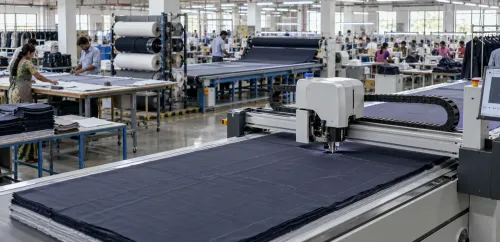
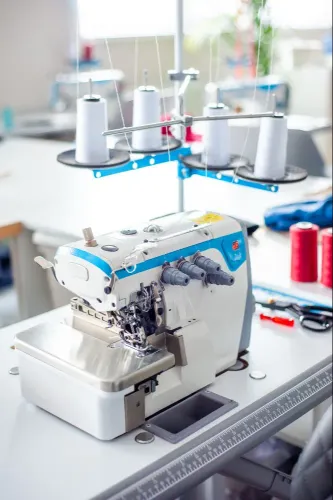
Growing production targets, rising labor costs, and increasing quality expectations are encouraging apparel manufacturers to invest in sewing automation. Automated sewing technologies help factories improve consistency while reducing manual effort across repetitive production processes.
Instead of replacing skilled operators, automation enhances their productivity by simplifying tasks and improving workflow efficiency.
What Is Sewing Automation?
Sewing automation combines specialized machinery, programmable controls, and intelligent production systems to perform stitching operations with greater consistency.
Applications include:
- Pocket attachment
- Collar stitching
- Sleeve attachment
- Label sewing
- Pattern stitching
- Elastic attachment
- Decorative stitching
Automated systems reduce variations that commonly occur during manual production.
Benefits for Manufacturers
Factories adopting sewing automation often experience improvements in multiple production areas.
Consistent Product Quality
Automated machines maintain uniform stitch length and placement throughout production batches.
Higher Productivity
Production lines can complete repetitive operations more quickly without compromising quality.
Reduced Rework
Accurate stitching minimizes defects that require repairs or reprocessing.
Better Labor Utilization
Operators can supervise multiple automated processes instead of performing repetitive manual tasks throughout the day.
Supporting Large-Scale Production in Tiruppur
The garment manufacturers operating in Tiruppur, Tamil Nadu, frequently manage high-volume production for domestic and international markets. Automation helps these factories maintain quality while meeting demanding delivery schedules.
By integrating advanced sewing equipment into production lines, manufacturers can improve efficiency without disrupting existing workflows.
Factors to Consider Before Investing
Before implementing sewing automation, manufacturers should evaluate:
- Production volume
- Garment category
- Operator training requirements
- Factory layout
- Machine compatibility
- Maintenance support
- Future production expansion
Choosing automation based on actual production needs delivers better long-term value than purchasing equipment solely because it offers advanced features.
Rainbow Garment Machines provides garment technology solutions designed to help apparel manufacturers modernize production with equipment that aligns with today's manufacturing requirements.
As automation continues to shape the garment industry, businesses that invest strategically are better positioned to improve efficiency, maintain product quality, and remain competitive in both domestic and export markets.
Keywords