Explore how a garment factory can gradually move from manual processes to automation while improving consistency, productivity, and production control.
Stage 1: Identify the Bottleneck
Automation should begin with a problem.
Perhaps fabric spreading takes too long, manual cutting creates inconsistencies, or production has increased beyond existing capacity.
Stage 2: Measure the Existing Process
Before investing, manufacturers should understand the current workflow.
How long does the operation take? Where do delays occur? Which tasks require the most repetitive labour?
These observations provide a baseline for evaluating automation.
Stage 3: Select the Right Technology
Once the bottleneck is clear, suitable machinery can be evaluated.
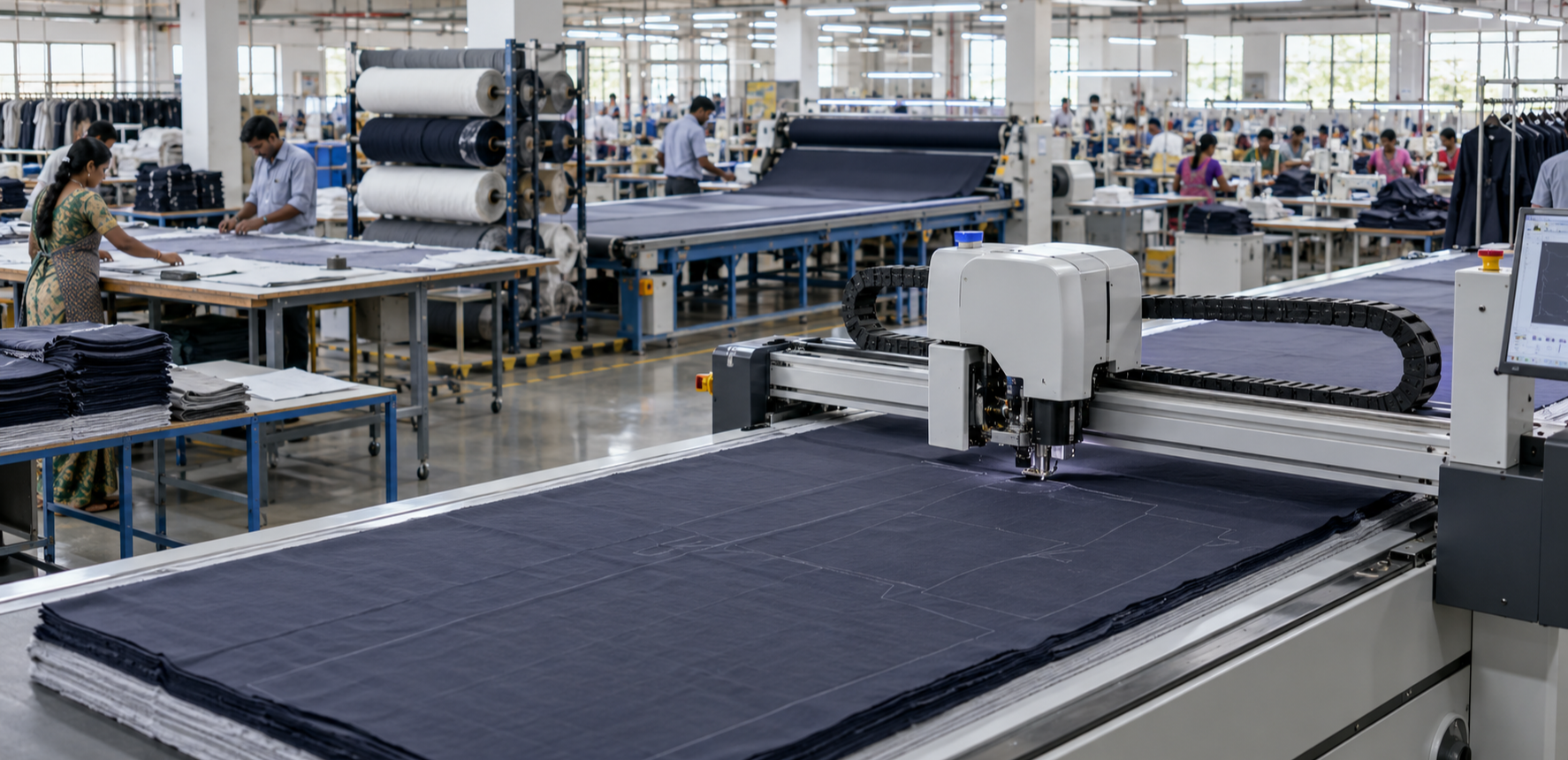
For cutting-related challenges, an Automatic Fabric Cutting Machine [Automatic Fabric Cutting Machine Page] may provide greater consistency when matched correctly to the factory's requirements.
Stage 4: Connect the Workflow
Automation becomes more valuable when individual processes work together.
Digital pattern preparation, fabric spreading, and cutting can form a connected workflow.
Manufacturers can explore a wider garment machinery range [Products Page] when planning this transition.
Stage 5: Prepare the Workforce
Introducing machinery does not remove the importance of employees. Operators need appropriate training to use equipment correctly.
Stage 6: Evaluate the Results
After implementation, compare the new process with the previous workflow. Look at productivity, consistency, material utilisation, downtime, and labour requirements.
For businesses planning this gradual transition in Tiruppur, Rainbow Garment Machines can be considered when evaluating suitable garment-technology solutions.
The Long-Term Approach
Automation does not have to happen all at once. A gradual approach allows manufacturers to prioritise processes where technology can provide the greatest practical benefit.
Keywords